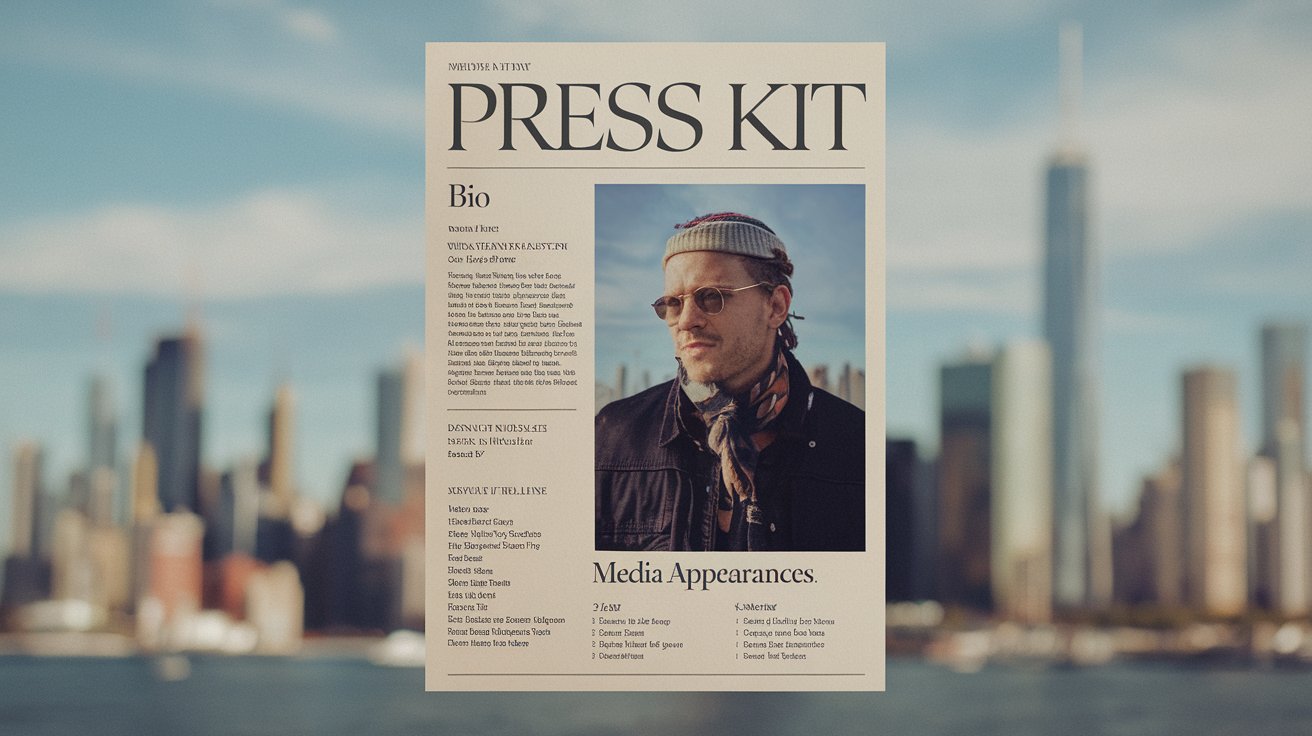
A press kit for an artist is a comprehensive digital or physical package containing essential promotional materials that media outlets, venues, and industry professionals need to feature or book an artist. Also known as an Electronic Press Kit (EPK), this professional portfolio includes your best music, bio, photos, videos, and contact information all organized in one accessible format.
What Is an Artist Press Kit and Why Do You Need One
An artist press kit serves as your professional calling card in the music industry. It’s a curated collection of your most compelling promotional materials designed to make journalists, booking agents, and venue owners take notice of your work. In 2025, over 85% of music industry professionals prefer receiving digital EPKs over physical materials, making this tool more crucial than ever for emerging and established artists alike.
The primary purpose of a press kit is to provide all necessary information about you and your music in one convenient package. This saves busy industry professionals time while ensuring they have everything needed to write about your music, book your shows, or consider you for opportunities. Without a professional press kit, you’re essentially asking gatekeepers to do extra work, which significantly reduces your chances of getting coverage or bookings.
Essential Components Every Artist Press Kit Must Include
A comprehensive artist press kit contains seven critical elements that industry professionals expect to find. Each component serves a specific purpose and contributes to your overall professional image. Missing any of these elements can immediately signal to reviewers that you’re unprepared or amateur, potentially costing you valuable opportunities.
Your Best Music and Audio Samples
Include 3-5 of your best tracks that represent your artistic range and current sound. These should be professionally recorded and mastered tracks, not demos or live recordings. Industry professionals spend an average of 30 seconds listening to new music, so your strongest material needs to grab attention immediately. Provide both streaming links and downloadable files in high-quality formats like WAV or 320kbps MP3.
Professional Artist Biography
Your artist bio should come in three versions: a one-paragraph summary (50-75 words), a medium bio (150-200 words), and a comprehensive version (300-500 words). The bio must highlight your musical achievements, influences, and unique selling points while maintaining a professional tone. Include specific details like chart positions, notable performances, or industry recognition rather than vague statements about your passion for music.
High-Quality Photos and Visual Assets
Professional promotional photos are non-negotiable for media coverage. Include at least 5-10 high-resolution images (300 DPI minimum) showing different poses and settings. These should include headshots, full-body shots, and lifestyle images that reflect your brand aesthetic. Also provide album artwork, logos, and any visual elements that reinforce your artistic identity and can be used across various media platforms.
How to Create an Effective Electronic Press Kit (EPK)
Creating a professional EPK requires strategic planning and attention to detail. The most successful electronic press kits follow a logical structure that makes information easy to find and digest. Start by organizing your materials digitally, then choose between creating a dedicated website, using EPK platforms, or developing a PDF version depending on your needs and budget.
Digital EPK Platforms and Templates
Several platforms specialize in EPK creation, including Sonicbids, Music Gateway, and ReverbNation. These services offer professional templates starting at $10-30 per month and include features like analytics tracking and direct submission to industry contacts. Alternatively, you can create a custom EPK using website builders like Squarespace or WordPress, giving you complete control over design and functionality.
EPK Design and User Experience Best Practices
Your EPK design should prioritize functionality over flashy graphics. Use a clean, professional layout with easy navigation and fast loading times. Industry professionals often review EPKs on mobile devices, so ensure your design is responsive and mobile-friendly. Include a clear contact section and make all music files easily accessible with one-click streaming or download options.
Music Videos and Visual Content for Your Press Kit
High-quality music videos significantly increase your chances of media coverage and booking opportunities. Include 2-3 of your best videos, prioritizing professional production quality over quantity. Live performance footage, behind-the-scenes content, and official music videos all serve different purposes in showcasing your artistry and stage presence to potential bookers and media contacts.
Video content should be hosted on professional platforms like YouTube or Vimeo with embed codes readily available. Provide both public links for easy sharing and private links for exclusive premieres or industry-only viewing. Include video specifications and technical details for venues or broadcasters who may need specific formats for their systems.
Achievements, Reviews, and Social Proof
Recent achievements and press coverage add credibility to your press kit and help journalists understand your current momentum in the industry. Include quotes from previous reviews, notable performance venues, radio play statistics, and streaming numbers if impressive. This social proof helps busy industry professionals quickly assess your market viability and newsworthiness.
Organize achievements chronologically with the most recent and impressive accomplishments featured prominently. Include specific metrics like festival attendance numbers, streaming milestones, or chart positions rather than general statements. Quote selection should focus on substantive reviews from recognized publications rather than generic praise from unknown sources.
Contact Information and Industry Links
Your contact information section must be comprehensive and current, including direct phone numbers, professional email addresses, and management contacts if applicable. Industry professionals need multiple ways to reach you quickly, especially for time-sensitive opportunities like last-minute festival slots or breaking news coverage.
Include direct links to all your social media profiles and streaming platforms, ensuring these accounts are professionally maintained and regularly updated. Provide Spotify for Artists, Apple Music, and other platform links with current monthly listener counts if significant. Make sure all links are functional and lead to active, content-rich profiles that reinforce your professional image.
Press Kit Examples and Industry Standards
Studying successful press kit examples from established artists helps understand industry expectations and best practices. Artists like Billie Eilish, Tyler Childers, and Phoebe Bridgers maintain exemplary EPKs that demonstrate consistent branding, comprehensive information, and user-friendly navigation. These examples show how different genres and career stages can effectively present their materials.
Industry standards have evolved significantly since 2020, with digital-first approaches becoming the norm. Modern EPK templates emphasize mobile responsiveness, social media integration, and streaming platform compatibility. The most effective press kits balance comprehensive information with concise presentation, respecting the time constraints of busy industry professionals while providing all necessary materials.
Common Press Kit Mistakes to Avoid
The most frequent press kit mistakes include using low-quality audio files, outdated photos, or incomplete contact information. Over 60% of rejected press kit submissions in 2024 contained technical issues like broken links, corrupted files, or incompatible formats that prevented proper review by industry professionals.
Avoid overwhelming recipients with excessive material or irrelevant information. A focused, well-curated artist press kit with 5-7 strong elements performs better than comprehensive packages with 15+ mediocre components. Quality always trumps quantity when competing for attention in a crowded marketplace where industry professionals review dozens of submissions daily.
Related video about what is a press kit for an artist
This video complements the article information with a practical visual demonstration.
FAQ – Common Questions
What is in an artist press kit?
An artist press kit contains your best music tracks, professional bio, high-quality photos, music videos, recent achievements and reviews, social media and streaming links, plus complete contact information. These seven essential elements provide everything industry professionals need to feature or book your act.
How much does it cost to make an artist press kit?
Creating a basic EPK can cost anywhere from free (using templates) to $500-2000 for professional design and photography. Most independent artists spend $200-600 on professional photos and $50-100 on EPK platform subscriptions or design tools for a complete package.
Do I need a physical or digital press kit in 2025?
Digital EPKs are strongly preferred in 2025, with over 85% of industry professionals requesting electronic formats. Physical press kits are rarely used except for special circumstances or high-level industry meetings. Focus your budget on creating an outstanding digital EPK.
How often should I update my artist press kit?
Update your press kit every 3-6 months or whenever you have significant new material, achievements, or professional photos. Keep streaming numbers, tour dates, and contact information current. Outdated press kits signal lack of momentum to industry professionals reviewing your materials.
What file formats should I use for my EPK?
Use high-quality MP3s (320kbps) or WAV files for audio, JPEG images at 300 DPI resolution, and MP4 videos in 1080p quality. Ensure all files are properly labeled and under 10MB each for easy downloading. Provide both streaming links and downloadable files for flexibility.
| EPK Component | What to Include | Industry Benefit |
|---|---|---|
| Best Music | 3-5 professionally recorded tracks | Immediate audio evaluation |
| Artist Bio | Short, medium, and long versions | Flexible content for different uses |
| Photos | 5-10 high-resolution professional images | Ready-to-use visual content |
| Videos | Music videos and live performances | Enhanced media coverage potential |
| Achievements | Recent press, stats, and milestones | Credibility and newsworthiness |