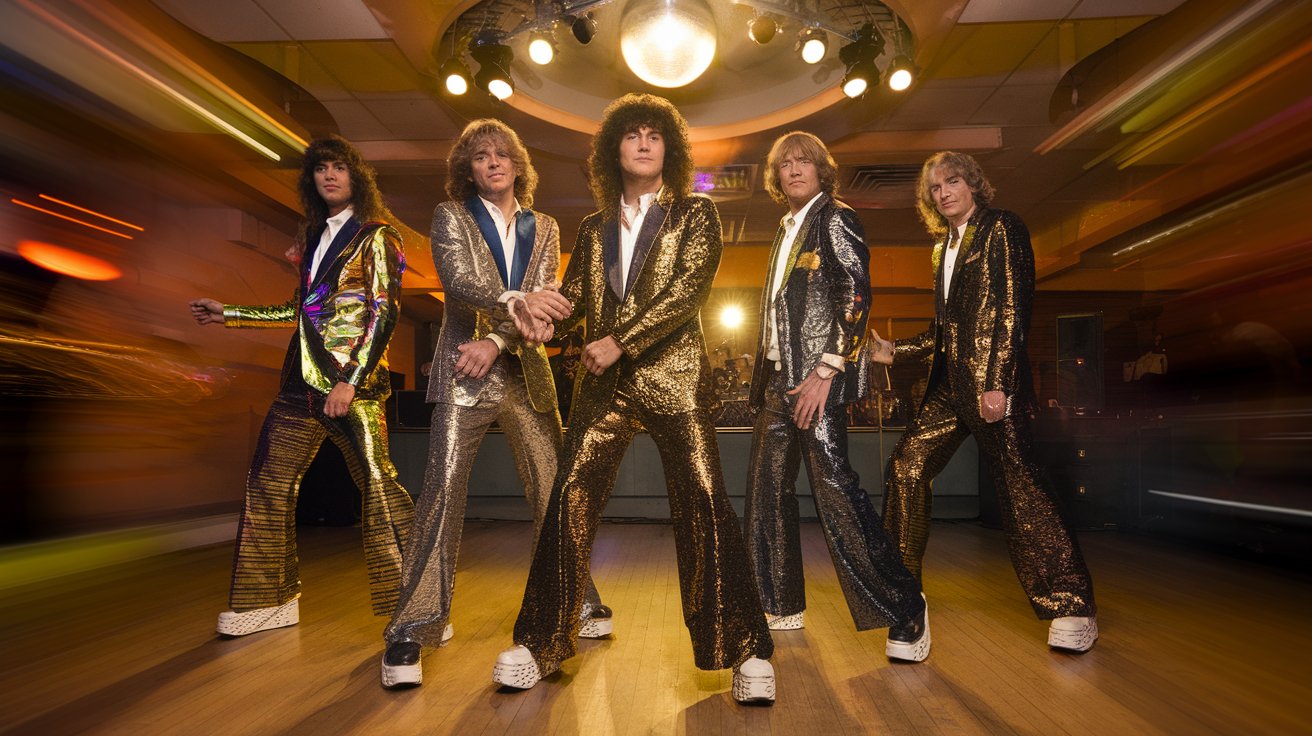
The disco group examples from the 1970s and 1980s represent some of the most influential musical acts in American history. These legendary bands and artists created the soundtrack for an entire generation, with groups like Chic, Earth Wind & Fire, and Sister Sledge dominating dance floors nationwide. From R&B-influenced disco to pure dance floor anthems, these disco artists defined an era of music that continues to influence modern pop culture.
Most Famous Male Disco Groups of All Time
The biggest disco star groups emerged primarily from the mid-1970s, with male-dominated bands leading the charge. Earth Wind & Fire stands as perhaps the most commercially successful, blending R&B, funk, and disco elements to create timeless hits like ‘September’ and ‘Boogie Wonderland.’ Their innovative approach to disco music helped bridge the gap between traditional soul and the emerging dance culture that was sweeping across American nightclubs.
The Bee Gees, while Australian-born, became synonymous with American disco culture through the Saturday Night Fever soundtrack. Their falsetto harmonies on tracks like ‘Stayin’ Alive’ and ‘Night Fever’ represent the quintessential disco group examples that defined the genre’s peak years between 1975-1979. KC and the Sunshine Band also dominated this era with infectious party anthems like ‘Get Down Tonight’ and ‘That’s the Way (I Like It),’ establishing Miami as a major disco hub.
Earth Wind & Fire – R&B Disco Pioneers
Earth Wind & Fire revolutionized disco by incorporating complex musical arrangements and spiritual themes. Founded in Chicago in 1969, they achieved their greatest success during the disco era with albums like ‘That’s the Way of the World’ (1975) and ‘Spirit’ (1976). Their unique blend of R&B disco elements made them crossover superstars, selling over 90 million records worldwide and influencing countless modern artists.
The Bee Gees – International Disco Legends
The Bee Gees transformed from a pop group into disco legends with the Saturday Night Fever soundtrack, which sold over 40 million copies worldwide. Their distinctive falsetto vocals and sophisticated songwriting on tracks like ‘More Than a Woman’ established them as the best known disco group internationally. The brothers Barry, Robin, and Maurice Gibb also wrote and produced hits for other disco artists, cementing their influence on the entire genre.
Legendary Female Disco Groups and Solo Artists
Female disco singers dominated the charts throughout the disco era, with both solo artists and groups achieving massive commercial success. Donna Summer, known as the ‘Queen of Disco,’ revolutionized dance music with extended versions and sophisticated production techniques. Her collaborations with producer Giorgio Moroder created the template for modern electronic dance music, making her one of the most influential disco artists of all time.
Sister Sledge emerged as one of the premier female disco groups, achieving international fame with hits like ‘We Are Family’ and ‘He’s the Greatest Dancer.’ Working with producers Nile Rodgers and Bernard Edwards of Chic, they created some of the most enduring disco classics. Other notable female groups included The Three Degrees, LaBelle, and First Choice, each bringing their own unique style to the disco group examples that defined the era.
Donna Summer – The Queen of Disco
Donna Summer became the undisputed Queen of Disco through groundbreaking recordings like ‘Love to Love You Baby’ and ‘I Feel Love.’ Her 17-minute version of ‘Love to Love You Baby’ introduced the concept of extended dance mixes to mainstream radio, while ‘I Feel Love’ pioneered the use of synthesizers in disco music. Summer’s five Grammy Awards and 32 chart hits established her as one of the most successful disco stars in history.
Sister Sledge – Family Harmony in Disco
Sister Sledge consisted of four sisters from Philadelphia who became international superstars during the disco era. Their album ‘We Are Family’ (1979), produced by Chic, spawned multiple hit singles and became one of the defining disco group examples of the late 1970s. The group’s harmonious blend of soul, pop, and disco elements influenced numerous female groups in subsequent decades.
Essential Disco Groups from the 80s Era
The disco groups 80s era saw the genre evolving into more electronic-influenced sounds while maintaining the essential dance floor appeal. Groups like Imagination, Shalamar, and Midnight Star carried disco traditions into the new decade, incorporating synthesizers and drum machines while preserving the genre’s party atmosphere. These artists represented the bridge between classic disco and the emerging freestyle and dance-pop movements.
Shalamar became one of the most successful 80s disco groups, with hits like ‘A Night to Remember’ and ‘Dead Giveaway’ showcasing the era’s more polished production values. The group’s choreographed performances and music videos helped establish the template for 1980s dance acts. Meanwhile, bands like Cameo and Zapp brought funk elements into disco, creating a hybrid sound that influenced hip-hop and modern R&B production techniques.
Shalamar – 80s Disco Evolution
Shalamar epitomized the evolution of disco into the 1980s with their sophisticated blend of soul, funk, and electronic elements. Formed in 1977, they achieved their greatest success in the early 80s with albums like ‘Three for Love’ and ‘Friends.’ Their polished performances and high-energy concerts made them one of the most popular disco group examples 80s audiences embraced nationwide.
Imagination – British Invasion of American Disco
Imagination brought a British perspective to American disco charts with hits like ‘Just an Illusion’ and ‘Music and Lights.’ Their elaborate costumes and theatrical performances represented the more flamboyant side of 80s disco culture. The trio’s success demonstrated how disco artists could maintain relevance by adapting to changing musical trends while preserving core disco elements.
Types of Disco Music and Sub-genres
Understanding the types of disco music helps categorize the diverse range of artists and styles within the genre. Euro-disco emerged in the mid-1970s with acts like Giorgio Moroder and Kraftwerk influencing American producers, while Philly Soul provided the R&B foundation through groups like The O’Jays and Harold Melvin & the Blue Notes. Hi-NRG disco represented the faster, more electronic variant that became popular in gay clubs and influenced early house music.
Funk-disco hybrid acts like Parliament-Funkadelic and Ohio Players created a grittier sound that appealed to both disco and funk audiences. Meanwhile, Latin disco incorporated salsa rhythms and Spanish vocals, with artists like Willie Colón and Héctor Lavoe achieving crossover success. These diverse disco group examples demonstrate how the genre accommodated various cultural influences while maintaining its essential danceability.
Regional Disco Scenes Across America
Different American cities developed distinct disco scenes with their own characteristic sounds and disco artists. Philadelphia became known as the birthplace of disco through Kenny Gamble and Leon Huff’s Philadelphia International Records, which produced hits for groups like The Three Degrees and MFSB. The Philly Sound combined lush orchestrations with driving rhythms, creating the template that many other disco group examples would follow.
New York City’s disco scene centered around legendary clubs like Studio 54 and The Paradise Garage, where DJs like Larry Levan and David Mancuso pioneered extended mixing techniques. Chicago developed its own variant that would eventually evolve into house music, while Miami’s scene emphasized Latin influences through artists like KC and the Sunshine Band. Each regional scene contributed unique elements to the broader disco music landscape that defined American popular culture in the 1970s.
Philadelphia – The Birthplace of Disco
Philadelphia established itself as disco’s spiritual home through the innovative work of producers Kenny Gamble and Leon Huff. Their Philadelphia International Records label created the ‘Sound of Philadelphia’ that influenced countless disco groups worldwide. Artists like Harold Melvin & the Blue Notes, The O’Jays, and Billy Paul emerged from this scene, establishing Philadelphia as a major force in disco music development.
New York City – Club Culture Capital
New York City became the epicenter of disco club culture, with venues like Studio 54 and The Loft defining the genre’s social aspects. The city’s diverse population influenced the eclectic mix of disco artists who found success there, from punk-influenced acts like Blondie to sophisticated groups like Chic. NYC’s underground gay scene also played a crucial role in developing disco’s aesthetic and musical innovations.
Most Influential Disco Producers and Their Groups
The disco group examples that achieved lasting success often worked with visionary producers who understood the genre’s technical requirements and cultural significance. Nile Rodgers and Bernard Edwards of Chic not only created their own classic recordings but produced hits for Sister Sledge, Diana Ross, and David Bowie. Their sophisticated approach to rhythm guitar and bass patterns became the foundation for countless disco tracks.
Giorgio Moroder revolutionized disco production through his work with Donna Summer, introducing synthesizer sequences and electronic textures that influenced modern dance music. His Munich Machine project represented one of the earliest examples of fully electronic disco. Other influential producers like Tom Moulton pioneered the 12-inch single format and extended remixes that became standard practice for disco artists seeking to maximize their impact on dance floors nationwide.
Disco’s Cultural Impact on American Society
The influence of disco group examples extended far beyond music into fashion, nightlife, and social attitudes throughout American society. Disco culture promoted inclusivity and acceptance, particularly within LGBTQ+ communities where many clubs served as safe spaces during a less tolerant era. The genre’s emphasis on glamour and escapism provided relief from the economic and political turmoil of the 1970s, making disco music a cultural phenomenon rather than just a musical style.
Fashion trends associated with disco included platform shoes, wide-lapel shirts, and flashy jewelry that became mainstream through the influence of successful disco artists. Dance styles like The Hustle became nationwide crazes, while disco films like ‘Saturday Night Fever’ brought the culture to suburban America. This broad cultural impact explains why disco remains relevant in contemporary popular culture, with modern artists frequently sampling classic disco tracks and incorporating disco elements into current productions.
Related video about disco group examples
This video complements the article information with a practical visual demonstration.
Everything you need to know about disco group examples
Who was the best known disco group of all time?
The Bee Gees are widely considered the best known disco group, achieving massive global success with the Saturday Night Fever soundtrack. Their distinctive falsetto harmonies and hits like ‘Stayin’ Alive’ and ‘Night Fever’ made them synonymous with disco culture. However, Earth Wind & Fire also holds this distinction for their innovative blend of R&B, funk, and disco elements, selling over 90 million records worldwide.
What are the main types of disco music?
The main types of disco include Classic Disco (Bee Gees, Donna Summer), R&B Disco (Earth Wind & Fire, Chic), Euro-Disco (Giorgio Moroder productions), Hi-NRG Disco (faster electronic variant), Funk-Disco (Parliament-Funkadelic), and Latin Disco (Willie Colón, Héctor Lavoe). Each type represents different regional influences and production approaches within the broader disco genre.
Which female disco groups were most successful?
Sister Sledge stands as the most successful female disco group, with hits like ‘We Are Family’ and ‘He’s the Greatest Dancer’ achieving international success. Other notable female disco groups include The Three Degrees, LaBelle, First Choice, and The Pointer Sisters. Donna Summer, while primarily a solo artist, is considered the undisputed ‘Queen of Disco’ with five Grammy Awards and 32 chart hits.
What disco groups were popular in the 80s?
Popular 80s disco groups included Shalamar (‘A Night to Remember’), Imagination (‘Just an Illusion’), Midnight Star, Cameo, and Zapp. These groups evolved disco’s sound by incorporating synthesizers and drum machines while maintaining the genre’s dance floor appeal. Many transitioned into freestyle and early hip-hop influences, bridging classic disco with emerging electronic dance music trends.
Which cities had the most influential disco scenes?
Philadelphia is considered the birthplace of disco through Kenny Gamble and Leon Huff’s Philadelphia International Records. New York City became the club culture capital with legendary venues like Studio 54. Miami developed its own scene through KC and the Sunshine Band, while Chicago’s disco scene eventually evolved into house music. Each city contributed unique sounds and cultural elements to disco’s development.
What was the #1 disco song of all time?
‘I Will Survive’ by Gloria Gaynor is often cited as the #1 disco song of all time due to its enduring popularity and cultural impact. However, ‘Stayin’ Alive’ by the Bee Gees and ‘I Feel Love’ by Donna Summer are equally considered for this title. These songs represent disco’s peak commercial success and lasting influence on popular culture and dance music.
| Disco Category | Top Examples | Key Contribution |
|---|---|---|
| Male Groups | Bee Gees, Earth Wind & Fire, KC and the Sunshine Band | Mainstream acceptance and crossover appeal |
| Female Artists | Donna Summer, Sister Sledge, Three Degrees | Vocal innovation and dance floor dominance |
| 80s Evolution | Shalamar, Imagination, Midnight Star | Electronic integration and genre transition |
| Regional Scenes | Philadelphia, New York, Miami, Chicago | Cultural diversity and production innovation |
| Sub-genres | R&B Disco, Euro-Disco, Hi-NRG, Latin Disco | Expanded audience reach and artistic variety |